Use the following link to answer questions on Biodiversity!
http://redpath-museum.mcgill.ca/Qbp/2.About%20Biodiversity/definition.htm
Here are the questions too if you perfer the cut and paste metod.
Biodiversity
What is biodiversity (BD)?
How does the article describe the two ways of looking at BD?
How many species exist on earth?
What group of organisms makes up for the majority of biodiversity on the planet?
Break down the DB of the planets species
How much of the deep ocean floor has been investigated by scientists
What are the two approaches to discussing the importance of BD? Describe them in your own words. Which do you related most with?
What are the two main classes of arguments for protecting biodiversity? Summerize them in your own words.
Why does this statement fit into one class but not the other?
What is the Noah Principle?
Where does the idea of stewardship come from, and what is it?
What is Anthropocentric value?
What are some general benefits to Humans of BD? Give a few spefic examples for each one..
Name and describe the processes that regulate BD?
Describe the neutral processes that regulate species diversity.
Monday, March 26, 2007

Thursday, March 8, 2007
Introduction to Ecology
Using the following link
Answer these questions Environmental Issues
Introduction to Ecology
What is Ecology?
Where does the name Ecology come from? Do you think that it fits?
Who can be given credit for coining the term Ecology?
Ecology is part of an other science, which one?
Ecology is a holistic science, what does that mean?
Right and wrong choices about the enviroment can be defined using ecology? Defend your answer?
Name and describe a few branches of ecology
What level of organization do ecologist study?
What is the biosphere and how large is it?
Define ecosystem
Describe some important parts of an ecosystem.
What are abiotic factors? Give a few examples
Describe biotic factors, and give an example
What is a biome?
Answer these questions Environmental Issues
Introduction to Ecology
What is Ecology?
Where does the name Ecology come from? Do you think that it fits?
Who can be given credit for coining the term Ecology?
Ecology is part of an other science, which one?
Ecology is a holistic science, what does that mean?
Right and wrong choices about the enviroment can be defined using ecology? Defend your answer?
Name and describe a few branches of ecology
What level of organization do ecologist study?
What is the biosphere and how large is it?
Define ecosystem
Describe some important parts of an ecosystem.
What are abiotic factors? Give a few examples
Describe biotic factors, and give an example
What is a biome?
Friday, March 2, 2007
Global Warming Film Festival II
The Global Warming Film Festival Write Up Ok, so we have seen four films
After the warming
Inconvenient truth
Water world
The day after tomorrow
Of the four films we have seen two were documentaries, and two were fictional accounts of a future. The films offered visions of the past and future based upon the perspective of today. After reading the article “Negative Predictions” I want you two write a five paragraph essay comparing and contrasting the four films against each other. Thinking about the validity of their predictions. Remember to take into account how their visions of the future are based upon facts, events or opinions, use specific examples.
After the warming
Inconvenient truth
Water world
The day after tomorrow
Of the four films we have seen two were documentaries, and two were fictional accounts of a future. The films offered visions of the past and future based upon the perspective of today. After reading the article “Negative Predictions” I want you two write a five paragraph essay comparing and contrasting the four films against each other. Thinking about the validity of their predictions. Remember to take into account how their visions of the future are based upon facts, events or opinions, use specific examples.
Tuesday, February 20, 2007
Blog Check!!!
Time to make sure you have all you need on your blog, its worth 70 points of your grade
- Blog up and working, links to me and your class mates
- An answer to the final exam question
- Scientific method, moon landing movie post
- Video link to a environmental movie
- Web quest post
- Power Articles (brochure and green power)
- Secret lives of stuff response
Thursday, February 15, 2007
Global Warming Film Festival I
 Post your notes on your blog:
What vision of the future does this film present?
What brought on these future events?
How old is this film?
Is the film's vision of the future belivable or not?
Notes on the corny, cheezy, hokey aspects of the film... CHEESE FACTOR!!
Thursday, February 1, 2007
Re-NEW-Able.. Energy
Pictured Below are several types or methods of producing renewable energy. Identify them and add thumbnails to your own blog.


What is green power? What makes a power source renewable? Us the following
Green Power FAQ from San Miguel Power
http://www.smpa.com/
http://www.tristategt.org/greenpower/locations.cfm
Where is their Green Power from?
What kinds of methods are they using?
How do they work? Where are they located?
What is Tri State Generation and Transmission Association ?
What are green energy certificates? How do they work, where do they come from?
When we buy "green energy" what are we really buying?
What kind of information can I find on the following websites?
National Renewable Energy Research Labs
Department Of Energy
Purchasing Green Energy
Green Energy Certificates
Ok, now its time to repeat the Power production brochure, this time we will make posters to explain various "green" energy methods.
What is green power? What makes a power source renewable? Us the following
Green Power FAQ from San Miguel Power
http://www.smpa.com/
http://www.tristategt.org/greenpower/locations.cfm
Where is their Green Power from?
What kinds of methods are they using?
How do they work? Where are they located?
What is Tri State Generation and Transmission Association ?
What are green energy certificates? How do they work, where do they come from?
When we buy "green energy" what are we really buying?
What kind of information can I find on the following websites?
National Renewable Energy Research Labs
Department Of Energy
Purchasing Green Energy
Green Energy Certificates
Ok, now its time to repeat the Power production brochure, this time we will make posters to explain various "green" energy methods.
Wednesday, January 31, 2007
Todays assigment will be in library researching power production techniques. Each topic should be covered by at least one student, but you can work in pairs or groups of three as well
Below are three ways power is produced in the US:
Coal burning, oil burning
Nuclear
Hydroelectric
For each means of power production I want you to create a tri fold pamphlet, you are not allowed to use WIKAPEDIA, and must have at least to physical print sources. Each pamphete should answer the following questions
How does x power production work?
How much of the USA's power is produced like this? Europes? The worlds?
What are the advantages of this form of power production?
What are the disadvantages?
cite your sources at the end of your pamphelet
This assigment will also be posted on my class blog www.mrvoytko.blogspot.com
Below are three ways power is produced in the US:
Coal burning, oil burning
Nuclear
Hydroelectric
For each means of power production I want you to create a tri fold pamphlet, you are not allowed to use WIKAPEDIA, and must have at least to physical print sources. Each pamphete should answer the following questions
How does x power production work?
How much of the USA's power is produced like this? Europes? The worlds?
What are the advantages of this form of power production?
What are the disadvantages?
cite your sources at the end of your pamphelet
This assigment will also be posted on my class blog www.mrvoytko.blogspot.com
Monday, January 29, 2007
Fun in the place where they keep all those books...
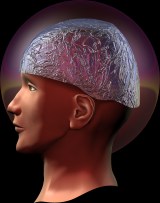
Today we will work in the library, learning how to evaluate web based sources... the following links will be useful to you!!
http://www.lib.berkeley.edu/TeachingLib/Guides/Internet/Evaluate.html
http://192.168.1.249/school/high/DW/05%2006%20calendar/SMAT.htm
HOMEWORK
Using your new found skills, evaluate this website:
http://zapatopi.net/afdb/
and post your response...
http://www.lib.berkeley.edu/TeachingLib/Guides/Internet/Evaluate.html
http://192.168.1.249/school/high/DW/05%2006%20calendar/SMAT.htm
HOMEWORK
Using your new found skills, evaluate this website:
http://zapatopi.net/afdb/
and post your response...
Bad information was available before the internet... extracredit if you can identify this hoax.

Friday, January 26, 2007
Stuff... the secret lives of everyday things
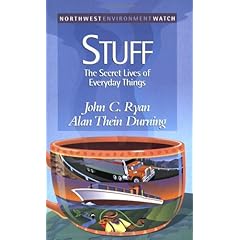
Todays assigment is to read and then present a chapter out of "Stuff" to your classmates. A few power point slide pictures will strengthen your presentation. Include those pictures along with your summary text on your blog. (Presentations are due wednesday)
Thursday, January 25, 2007
Intro to the scientific method

The Scientific method
Is the truth really out there……
Read through a few of the following links, then in your own words post your answers to these questions, we will share some of the answers at the end of class.
What is the scientific method?
What are the steps in it?
What is involved in each step?
Find and post a diagram with arrows to illustrate the method?
What is a hypothesis, where does it come from?
What is a theory, where does it come from?
What is a model, where does it come from?
What is a scientific law, what are its major limitations?
What are the steps in it?
What is involved in each step?
Find and post a diagram with arrows to illustrate the method?
What is a hypothesis, where does it come from?
What is a theory, where does it come from?
What is a model, where does it come from?
What is a scientific law, what are its major limitations?
Who uses the scientific method?
In what situations does the scientific method pertain. Can morals and ethics be determined using it? What about laws?
What is proof?
What is truth?
What is fact?
How does the scientific method relate to truth, fact and proof?
How does the knowledge produced from Scientific research differ from knowledge gained though only logic and philosophy
Homework
You have read two articles about the scientific method. Write a paragraph comparing and contrasting the way in which each article portrays it. Remember to take a look at the authors tone and word choice and to answer the questions “Which article do you find most believable?”
Wednesday, January 24, 2007
Tuesday, January 23, 2007
Dark Side of the moon

http://en.wikipedia.org/wiki/Dark_Side_of_the_Moon_(documentary)
http://www.jonhs.net/freemovies/dark_side_of_the_moon.htm
http://video.google.com/videoplay?docid=3288261061829859642&q=dark+side+of+the+moon
moon hoax
http://en.wikipedia.org/wiki/Apollo_moon_landing_hoax_accusations
OK, so what is real, what is true, how do we know who and what to trust? After watching Dark Side of the Moon today, do you feel like you were fooled? When did you realize that this was a "Mock-umentry"? What hints did the film makers give you in the beginning and the throughout the film? Tell me what you think and how you felt about the film.... and why would it be easy to belive the films message if you were not a critical thinker. We will watch a number of films and documentries durring the semester it is important you take a critical thinking approach to the message each film presents.
http://www.jonhs.net/freemovies/dark_side_of_the_moon.htm
http://video.google.com/videoplay?docid=3288261061829859642&q=dark+side+of+the+moon
moon hoax
http://en.wikipedia.org/wiki/Apollo_moon_landing_hoax_accusations
OK, so what is real, what is true, how do we know who and what to trust? After watching Dark Side of the Moon today, do you feel like you were fooled? When did you realize that this was a "Mock-umentry"? What hints did the film makers give you in the beginning and the throughout the film? Tell me what you think and how you felt about the film.... and why would it be easy to belive the films message if you were not a critical thinker. We will watch a number of films and documentries durring the semester it is important you take a critical thinking approach to the message each film presents.
Monday, January 22, 2007
Art and Facts... hunt for the correctness

Fact, fiction and funnies...
Information is presented to us everyday in a number of ways. Even comedies like Monty Pythons Meaning of Life contain factual information. The question is, how factual were these Oxford and Cambridge boys when they penned this little ditty (it was Actually Eric Idol who did most of the work)?
After watching the video and looking at the lyrics, use the web and books available to you to "fact check" the song... if you are lucky you may actually find you are not the only one to ever do this.. (hint.. hint). Make sure you note what facts you find and where you find them.
Watch the following video
Here is a link to the lyrics to the song

First and last assigment
This is the question to The Final Exam
When I was in the boy scouts they taught us a saying when we went camping. “leave only your footprints and take only your memories with you”. Whether we like it or not our daily lives make a impact on the world around us. Nicely put we make a difference. I would like you to think about the footprints you leave in one day of your life.
Answer it right now, and reflect upon it over the course of the semester. After you have written and posted your responce, read and comment on one of you fellow classmates responces. Links can be found on my page and here:
Denise
Erin
Jeffery
Lobo
Megan
Parker
When I was in the boy scouts they taught us a saying when we went camping. “leave only your footprints and take only your memories with you”. Whether we like it or not our daily lives make a impact on the world around us. Nicely put we make a difference. I would like you to think about the footprints you leave in one day of your life.
Answer it right now, and reflect upon it over the course of the semester. After you have written and posted your responce, read and comment on one of you fellow classmates responces. Links can be found on my page and here:
Denise
Erin
Jeffery
Lobo
Megan
Parker
Syllabus
Environmental Issues
Structure and nature of the subject
Modern society is to a very high degree based on the natural sciences and technology. For this reason, the individual needs knowledge of the natural sciences, both as an individual and as a member of society. Energy, environmental and resource issues place demands on a broad knowledge of the natural sciences. At the same time, the speed of development in the natural sciences gives rise to new questions, not least of an ethical nature.
Modern natural sciences are characterized by division into many specialist areas, at the same time as many questions require an interdisciplinary approach. This course is interdisciplinary, where issues concerning the natural sciences can be studied from several perspectives. The course takes up environmental issues, and also issues concerning ecology, energy and the use of resources.
Working methods will be varied, a heavy emphasis on enabling students themselves to search for answers and information and present them, fostering good critical thinking skills in the process. Material will be dealt with in active manor, including but not limited to small informal student presentations, posters, displays and the use of drama. Creativity and humor are a must!
Aim of the subject
Students shall examine the connection between lifestyle choices (as consumers and voters) and their effect the environment. The aim of the subject is to provide knowledge of the natural sciences to enable pupils to determine their views on issues, which are important for the individual and society such as e.g. genetics, sustainable development and energy issues.
Goals to aim for
Pupils should:
Have knowledge of the importance of lifestyle for the environment and sustainable ecological development.
Pupils should:
Have knowledge of the importance of lifestyle for the environment and sustainable ecological development.
Develop their ability to interpret and critically examine different types of information, take part in discussions on different societal issues, and form their views on the basis of a natural scientific and ethical perspective.
Be able to understand the difference between statements based on fact and value viewpoints in the natural sciences.
Be able to describe environmental problems from a natural science perspective, and actively take part in discussions on the possibilities for influencing development.
Develop their ability and interest in searching, critically examining and assimilating knowledge about current research in the natural sciences from different sources of information.
Develop their knowledge of the research and investigative methods used in science, and how results can be presented.
Develop their ability to understand and use the language and theoretical concepts of the natural sciences.
Assessment
The course will be assessed continuously via weekly logbook entries, quizzes participation in smaller presentation and assignments as well as a major essay exam, book report, and a final project (five page academic paper ) and associated presentation (good deal of room for creativity here, could be a film, PR campaign or dramatization).
Grading
Your Grade is determined by your percentage of total points earned. Grades will consist of approximately 50% logbooks (blog), 5% effort/conduct/participation. The other 50% comes from quiz scores, final projects, bookreport, presentations and other major assigments. Your progress and grades will be printed out regularly, so you will know what your letter grade is AT ALL TIMES.
Grading scale
A+ 98-100% B+ 88-89% C+ 78-79% D+ 68-69%
A 94-97% B 84-87% C 74-77% D 64-67%
A- 90-93% B- 80-83% C- 70-73% D- 60-63%
Syllabus (list of potential subject areas)
Units or Subject Areas (Student interest can change these)
Units or Subject Areas (Student interest can change these)
Introduction to Scientific Philosophy and Critical thinking
What science is and isn’t
The nature of scientific fact, opinion and theory
The art of taking a stand
A brief overview of ecology
Ecological terminology
Natural cycles
The flow of energy and materials in ecosystems
Photosynthesis
Greenhouse effect
Ozone layer
Ocean currents
Energy
Physics background (work/power/energy, energy types, energy quality)
Power production
Types and their effects on the environment
Transportation
Negative environmental impacts
What science is and isn’t
The nature of scientific fact, opinion and theory
The art of taking a stand
A brief overview of ecology
Ecological terminology
Natural cycles
The flow of energy and materials in ecosystems
Photosynthesis
Greenhouse effect
Ozone layer
Ocean currents
Energy
Physics background (work/power/energy, energy types, energy quality)
Power production
Types and their effects on the environment
Transportation
Negative environmental impacts
Acid rain
Over fertilization
Erosion
Desertification
Impacting Ozone and Greenhouse
Sustainable development
Overpopulation?
Issues of land use (Earth, Air, water)
§ Things like:
· Reef , wetland and rainforest destruction
· Tourism effect on the environment
· Cities effect on ecosystems
· Industry
Renewable vs. consumable resources
Biodiversity
Packaging
Food production and consumption
Genetics
The effects of modified organism
Local Issues
Over fertilization
Erosion
Desertification
Impacting Ozone and Greenhouse
Sustainable development
Overpopulation?
Issues of land use (Earth, Air, water)
§ Things like:
· Reef , wetland and rainforest destruction
· Tourism effect on the environment
· Cities effect on ecosystems
· Industry
Renewable vs. consumable resources
Biodiversity
Packaging
Food production and consumption
Genetics
The effects of modified organism
Local Issues
Subscribe to:
Comments (Atom)
